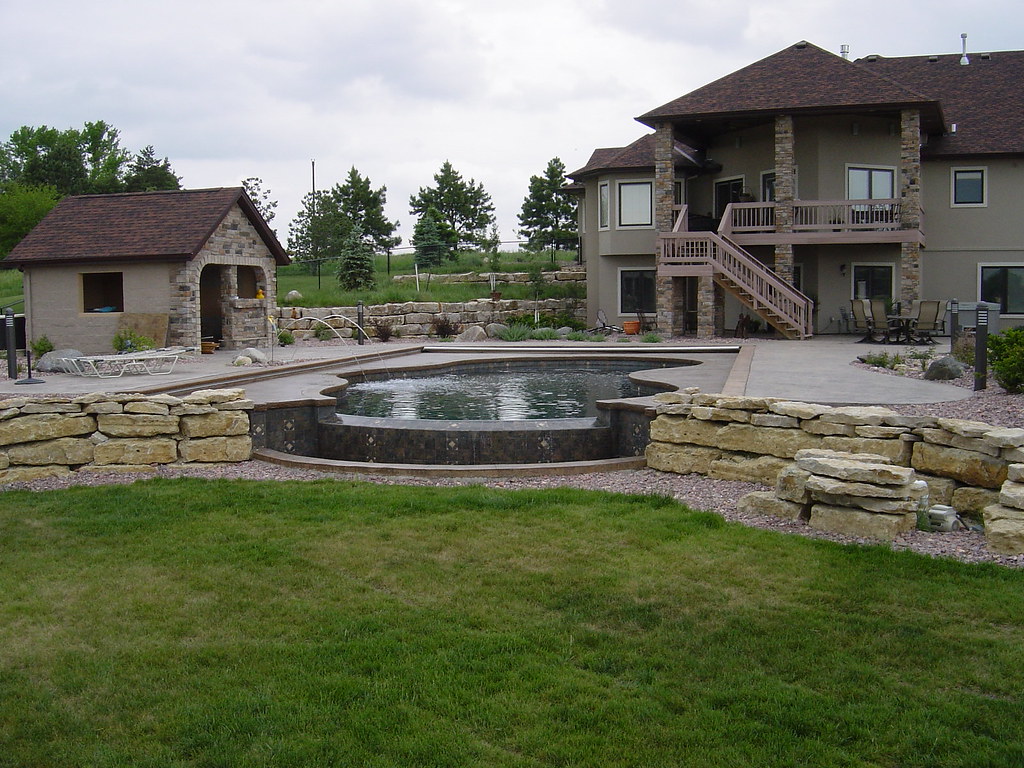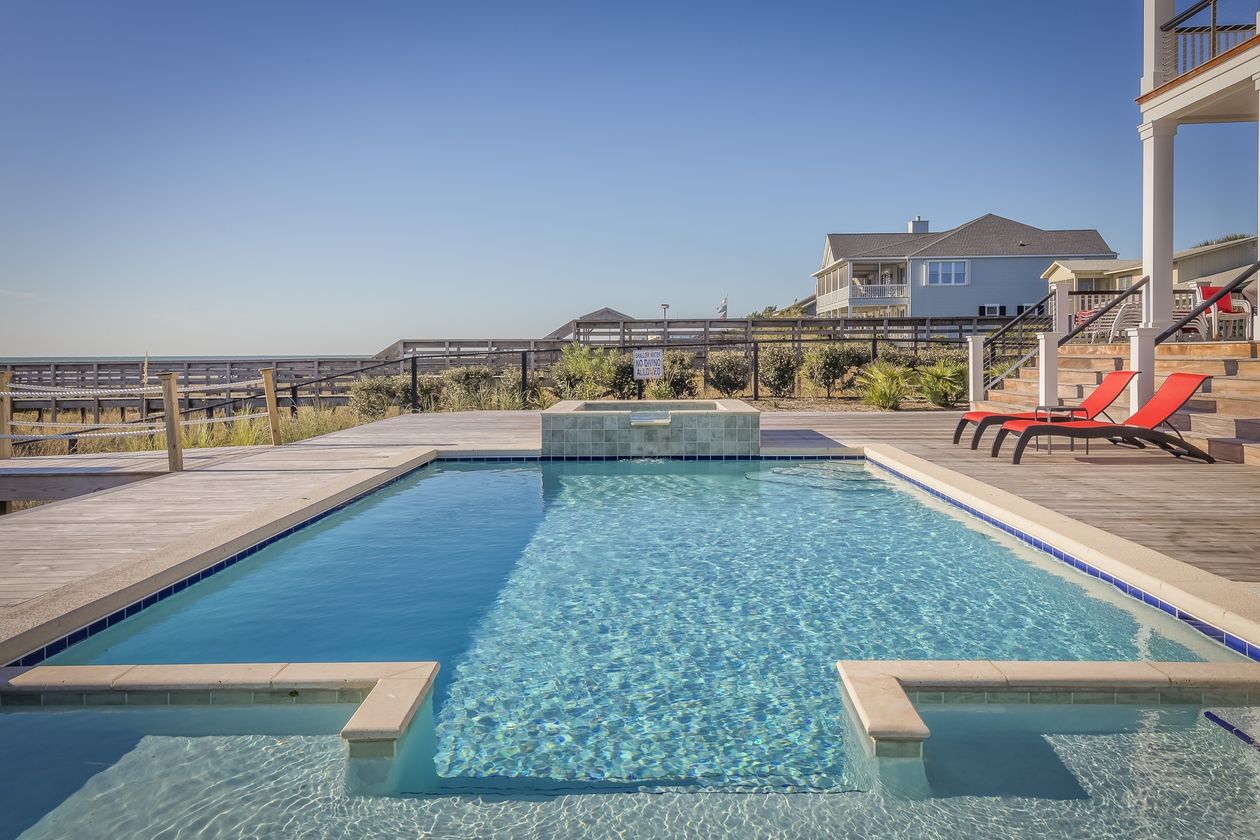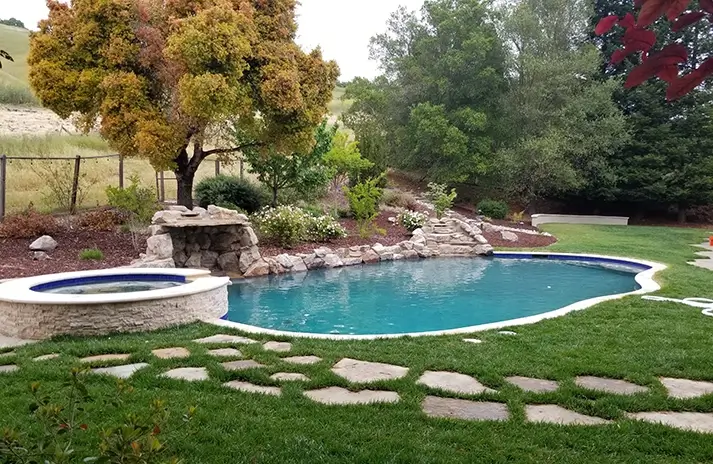
Gunite pools are the backbone of backyard building in the East Bay, and for good reason: a steel-reinforced concrete shell can be shaped to almost any design and lasts for decades. But “durable” is not the same as “maintenance-free.” Gunite is a living surface that reacts to water chemistry, weather, and usage, and how you care for it shifts with the seasons. Here is a practical, season-by-season calendar for Danville homeowners, built around our local climate — hot, dry summers and mild, wet winters.
Why Gunite Needs Seasonal Attention
Unlike fiberglass or vinyl, a gunite shell has a slightly porous surface. That porosity makes it strong and repairable, but it also means the shell constantly exchanges minerals with the pool water. When water gets too aggressive (low calcium hardness or low pH), it slowly pulls calcium out of the plaster finish — a process called etching. When water gets oversaturated, minerals fall out of solution and bond to the surface as scale or rough spots. Neither problem shows up overnight; both build quietly across a season. A calendar-based routine keeps that chemistry in the safe zone and protects both the finish and your equipment.
Spring (March – May): Opening and Inspection
- Inspect the shell. Walk the waterline and the steps with the pool light on after dark. Look for hairline cracks, calcium nodules, or rough patches under your feet. Small crack issues are far easier to address before swim season.
- Rebalance after the rains. Winter rains dilute pool water. Test pH, alkalinity, calcium hardness, and stabilizer (CYA), and bring them into range in that order.
- Check the waterline tile. Freeze nights are rare in Danville but a wet winter softens mineral crust — a good time for a gentle tile line cleaning.
- Service the equipment. Clean filter cartridges, oil or inspect the pump motor area, confirm the timer and automation run your intended schedule.
Summer (June – September): Chemistry Under Heavy Load
Danville summer heat, heavy bather loads, and intense sun push free chlorine down fast and drive evaporation that concentrates minerals. This is the season that punishes neglect.
- Test two to three times per week. Prioritize free chlorine and pH. Sun-exposed pools commonly need stabilizer maintained in the 30–50 ppm range to keep chlorine from burning off by mid-afternoon.
- Run the pump longer. Eight hours or more per day during peak heat keeps chlorine evenly distributed and filtration ahead of the load.
- Watch the water level. Evaporation is fast here; top off with hose water and re-test weekly, because fill water adds hardness over the summer.
- Brush weekly. Brushing the walls and steps disturbs early scale and algae colonies before they get established — five minutes with a nylon brush pays for itself.
Fall (October – November): Transition and Cleanup
- Catch the leaves early. Organic debris stains gunite finishes. Empty skimmer baskets more often, keep the cover handy, and don’t let leaf piles sit on the steps or shelf.
- Scale back — don’t shut down. Danville winters are mild enough that many owners keep pools running year-round at reduced hours. If you lower the schedule, keep at least a few hours of filtration daily and monitor chlorine after storms.
- Post-season rebalance. After a heavy-use summer, alkalinity and calcium hardness usually need attention. Fixing them now prevents winter etching.
Winter (December – February): Protect the Shell
- Keep the water balanced all winter. A gunite pool that sits unbalanced for three wet, cool months is the classic setup for spring surface repair. Test monthly at minimum.
- Run the pump during freezes. Hard freezes are infrequent but real in the Diablo Valley. Moving water rarely freezes; on a freeze night, run the equipment and keep surface skimmers free of ice.
- Plan winter projects. Off-season is the smart time for resurfacing quotes, tile work, or equipment upgrades — remodel crews have shorter lead times than in spring.
Year-Round Habits That Extend a Gunite Finish
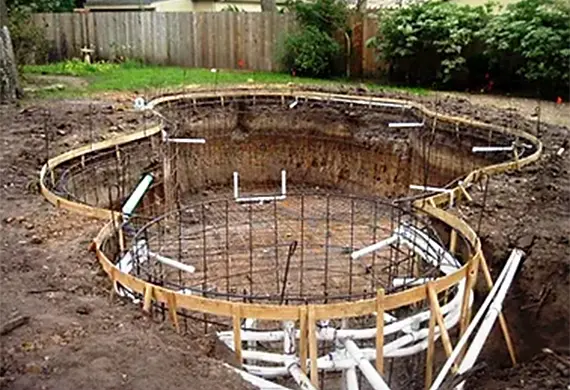
Three habits matter more than anything on a calendar. First, keep pH in the 7.4–7.6 range; it protects swimmers, equipment, and the plaster surface simultaneously. Second, address cracks or delamination quickly — gunite is extremely repairable, but only while the damage is small. Third, never drain a gunite pool without professional guidance, because hydrostatic pressure in our clay soils can lift an empty shell. If you are seeing persistent staining, rough spots, or you are planning a new build, it helps to understand how the shell is actually put together — our swimming pool construction process page walks through each phase, from engineering and steel to the plaster finish that all of the care above protects.
And when the right move is a fresh start rather than a repair, the planning matters even more. Homeowners weighing a new pool or a full remodel in town can see what goes into site evaluation, design, and scheduling on our custom pool construction in Danville page. A well-built shell with a consistent care rhythm behind it is the difference between a pool that looks new for ten years and one that needs resurfacing at year five.