
How the Design Becomes a Real Plan
Long before anyone breaks ground, every client gets a custom pool design. Aqua Dream Pools builds incredibly realistic renderings first, so you can see the pool, the spa, and the surrounding features before committing to any of them — and make revisions and improvements while changes are still free. Only after the design is approved does the team move to the layout stage documented on the swimming pool construction overview, taking the dimensions from the drawing and staking them onto the actual site. That outline is the first time the numbers become something you can see: the size and shape of the pool, right there on your property, with room to adjust placement before excavation begins.
Excavation: The Day Your Backyard Changes Shape
Layout complete, the excavators arrive. This is the stage that removes grass, underlying soil, and rock to prepare the site, and it is the messiest, loudest week of the project. It is also the week the pool becomes permanent — the hole follows the approved layout exactly, and every later stage builds on this shape. From the day of excavation, the company’s target is realistic: in as little as six weeks, the construction process can leave you swimming.
Steel and Forming: The Framework Nobody Photographs
After the hole comes the skeleton. Just as wood and steel form the foundation of a home, steel and wood forms shape the structure of the pool here. It is visually rough — rebar grids and wood framing that look nothing like a pool — but it is the framework for a pool-scape with real structural integrity. The steel schedule includes 4, #4 rebar at the bond beam, the maximum strength ring at the top edge of the pool where loads concentrate.
Plumbing and Electrical Before a Drop of Concrete
Before gunite, all plumbing and electrical components are installed. The plumbing is pressure tested; the electrical meets city and state codes. One detail that pays off every month on the utility bill: the suction lines from the main drains and the skimmer are plumbed separately, which maximizes water filtration and reduces energy use.
Gunite Day
Gunite day is the day the pool happens. A large crew applies gunite through high-pressure hoses, working the concrete onto the forming structure, and the first real three-dimensional version of the design appears. It is genuinely exciting to watch — and it comes with homework. For one week after spraying, the gunite shell needs to be hosed down twice a day, 5 to 10 minutes each time, to promote proper curing. Homeowners who do this well end up with a stronger shell; the crew will tell you exactly what to do and when.
Decking, Tile, Coping, and Masonry
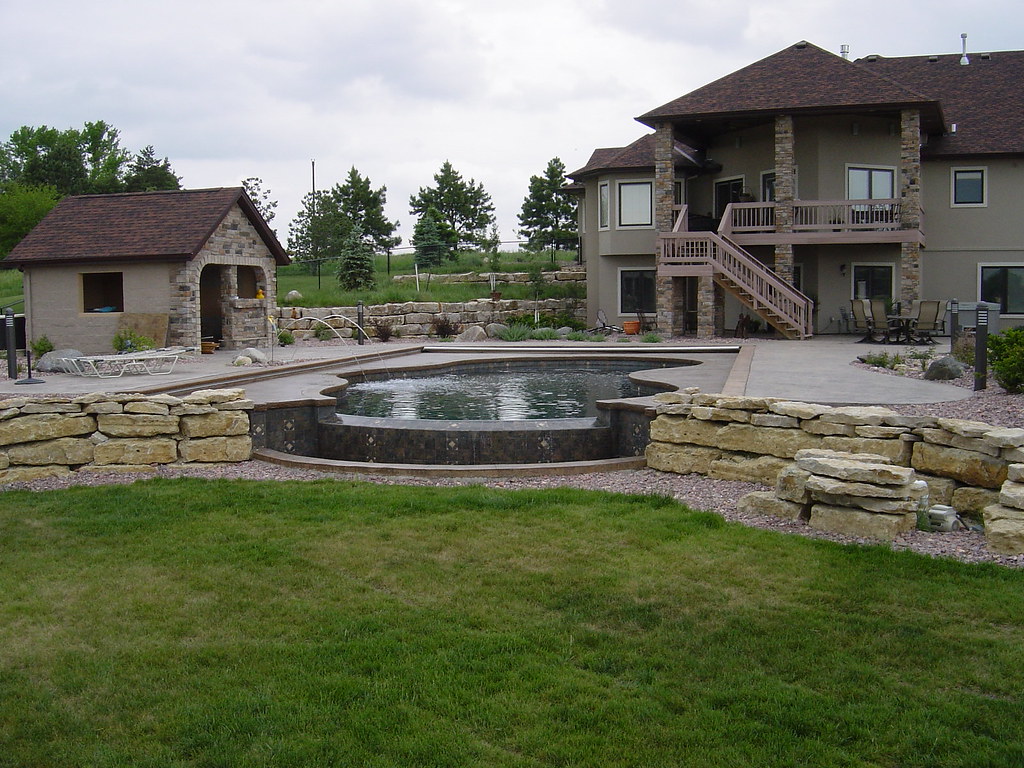
With the shell cured, the detail work transforms the site from construction zone to backyard. Decking surfaces follow the design choice: custom stone, broomed concrete, salt, aggregate, brick, pavers, or stamped patterns. This stage also builds out the features that made the rendering tempting in the first place — outdoor fireplaces, fire pits, fountains, summer kitchens. Tile options include natural stone, slates, ceramics, and mosaics; the coping can be crafted from natural flagstone, brick, cement, or other materials. Masons on the team take visible pride in this phase, and quality is monitored during installation so the finished stonework is built to last.
Plaster and the Seven-Day Brush
Then comes plaster — blown onto the gunite and smoothed quickly by an experienced crew, after which the pool is immediately filled with water. Like gunite curing, plaster finishing asks something of the homeowner: for the next seven days, the pool needs to be thoroughly brushed twice a day to ensure the smoothest possible surface. The company is upfront that this step is essential; if you cannot participate, the team asks you to say so in advance so arrangements can be made.
Pool School and the First Swim
Start-up ends with training rather than paperwork. A first-time pool owner can feel overwhelmed by the equipment, so the crew provides “pool school” — hands-on instruction on how to use the pool controls — plus a complimentary manual that explains, in detail, how to care for the pool. Questions after handover are part of the deal; the team stays available on the care and operation of the equipment long after the trucks leave.
Six weeks from excavation to first swim is less time than many people spend planning the party. Knowing what happens at each stage — and what the crew expects from you at each — makes the construction site feel like what it is: an ordered sequence from the custom pool construction plan to the backyard in the finished photos.