
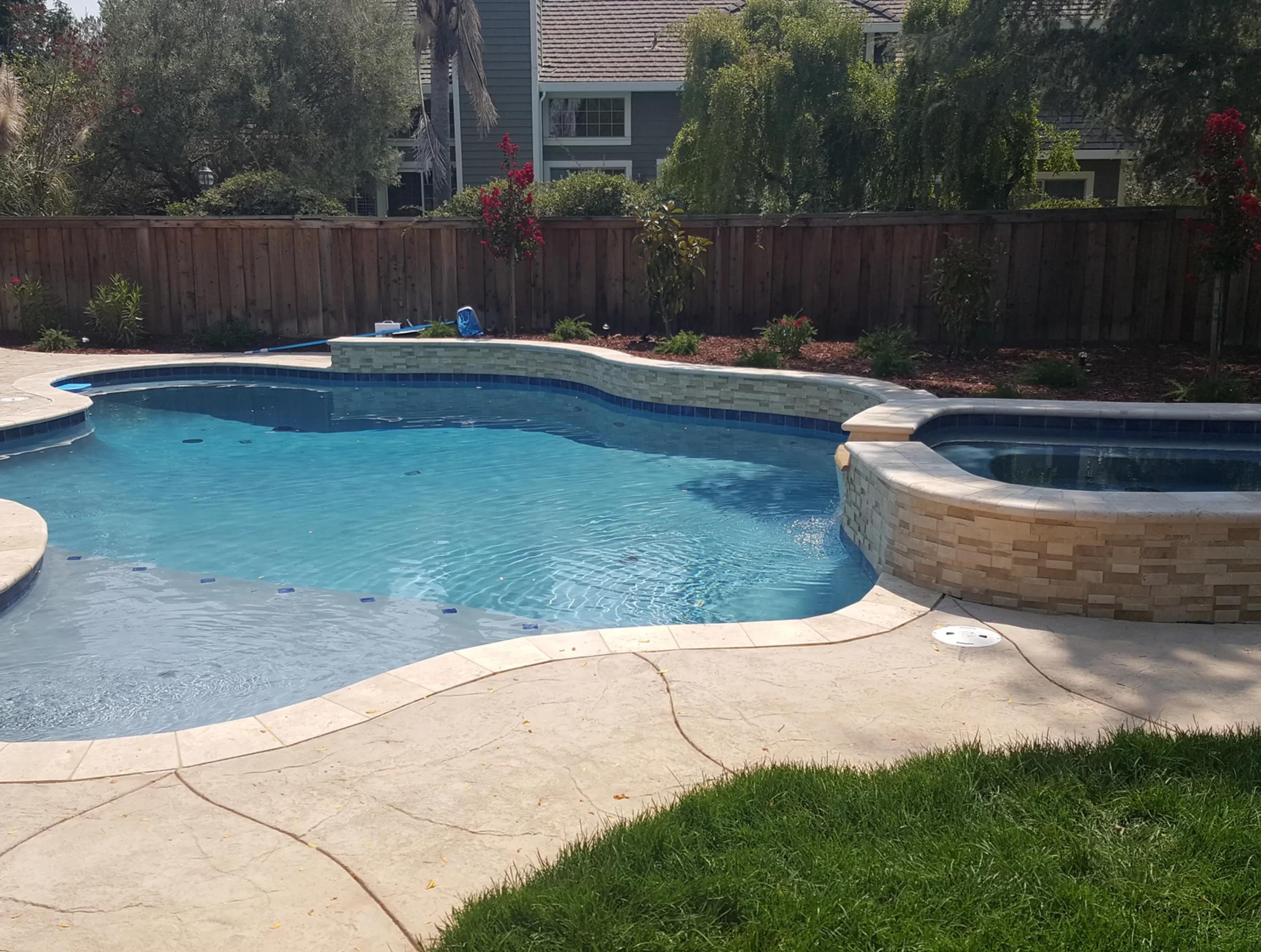
Why Resurfacing Is the Heart of Most Pool Remodels
Among all the projects a swimming pool remodel can include, renewing the interior surface is the one most Danville pool owners eventually face. Resurfacing means applying a new finish to the inside of the pool shell, and it fixes the problems you notice first: rough texture, stains that brushing will not lift, and small cracks in the plaster. It is also the change that makes an older pool look brand new again the moment it is refilled.
Concrete gunite shells last for decades, but their interior coating does not. Sunshine, temperature swings, and shifting water chemistry slowly wear the surface down, so picking the right replacement finish matters as much as deciding to resurface.
The Three Main Interior Finish Options
For pool resurfacing, Danville homeowners most often choose between three interior finishes: plaster, pebble, and quartz. Each has a distinct feel underfoot, a different look in the water, and its own maintenance personality.
Plaster: The Classic Choice
White plaster is the traditional finish, and it remains popular because it delivers that bright, classic pool color at the lowest cost of the three options. The surface is smooth and comfortable to walk on, and it can be tinted to shift the water’s hue. The trade-off: plain plaster is the most sensitive of the three finishes to water chemistry, so it rewards owners who stay on top of balancing.
Pebble: Built for Durability
Pebble finishes blend small, natural stones into the surface coating, creating a textured, non-slip feel and a rich, natural water color. It is the toughest of the three, handling heavy use, big temperature swings, and less-than-perfect chemistry better than plain plaster. Families who want a finish that shrugs off years of heavy swimming tend to land here, accepting a slightly higher price.
Quartz: The Middle Path
Quartz finishes mix mineral aggregate into a plaster base, producing a surface that is smoother than pebble yet tougher than plain plaster. Fine flecks in the mix catch the sunlight and give the water a subtle sparkle, and the range of tint colors is wide. For many Tri-Valley pool owners, quartz is the balance point between budget, comfort, and longevity.
What Danville’s Climate Means for Your Finish
Outdoor pools in the Danville area run through hot, dry summers and cool winters, and those swings stress both evaporation and water chemistry. Choosing a finish that tolerates them, paired with regular testing, keeps the surface looking good longer.
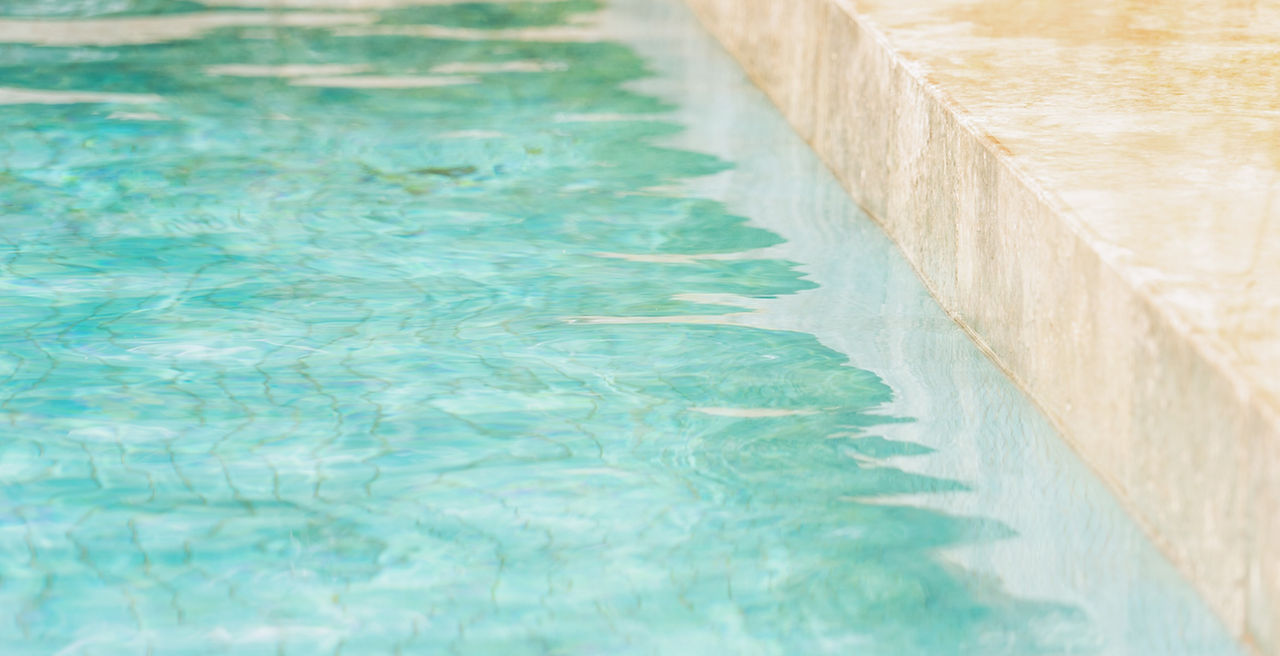
See and Compare Finishes in Person
Reading about finishes is one thing; seeing them is another. At our affiliate NPT pool design showroom in Livermore, you can view hundreds of selections for new pools and remodels, including pool tile, porcelain, glass, coping stones, travertine, and plaster finishes, along with mosaics, equipment, and decking materials. Our sales team will help you match a surface to your vision. To see how resurfacing fits into a full remodel project, visit our Swimming Pool Remodel page for the complete scope of work.
Plaster, Pebble, or Quartz: A Quick Decision Guide
- Choose plaster if you want the classic look, a smooth surface, and the lowest upfront cost, and you stay diligent with water chemistry.
- Choose pebble if durability is the priority: a finish that stands up to heavy use with a natural, textured look.
- Choose quartz if you want more strength than plaster and a smoother feel than pebble, with sparkle and a wide color range in between.
Still deciding? Most pool resurfacing projects in Danville come down to budget, feel, and longevity.
Frequently Asked Questions
How long does each interior finish typically last?
Lifespan depends heavily on water care, but as a general guide, white plaster typically serves about 10 to 15 years, quartz runs a few years longer, and pebble finishes can exceed two decades when the water stays balanced. Resurfacing before the surface fails fully also protects the shell underneath.
Can I change my pool’s color during a resurfacing project?
Yes. Resurfacing is the natural moment to change the water’s appearance, because the finish color drives how the water looks. White plaster gives a pale blue, tinted plaster shifts it toward gray or green-blue, and pebble and quartz lines offer blended color choices. Seeing samples side by side makes the decision easier.
Does the pool need to be drained for resurfacing?
In most cases, yes. Applying a new interior finish to a gunite pool is done with the pool emptied so the surface can be prepared and coated properly. Your crew will plan the drain, prep, and refill sequence with you to keep the downtime short.